Aim and Scope
With its scholarly continuity, academic quality, and arts-focused interdisciplinary approach, the International Hisarlı Ahmet Symposium has earned a respected standing. For sixteen years, it has made significant contributions to the dissemination of original research in art and education, the development of academic collaboration among scholars and artists, and the discussion of new ideas. By focusing each year on a timely theme of strong social relevance, the symposium serves not only the exchange of knowledge but also the advancement of scholarly thought and the strengthening of a shared academic culture.
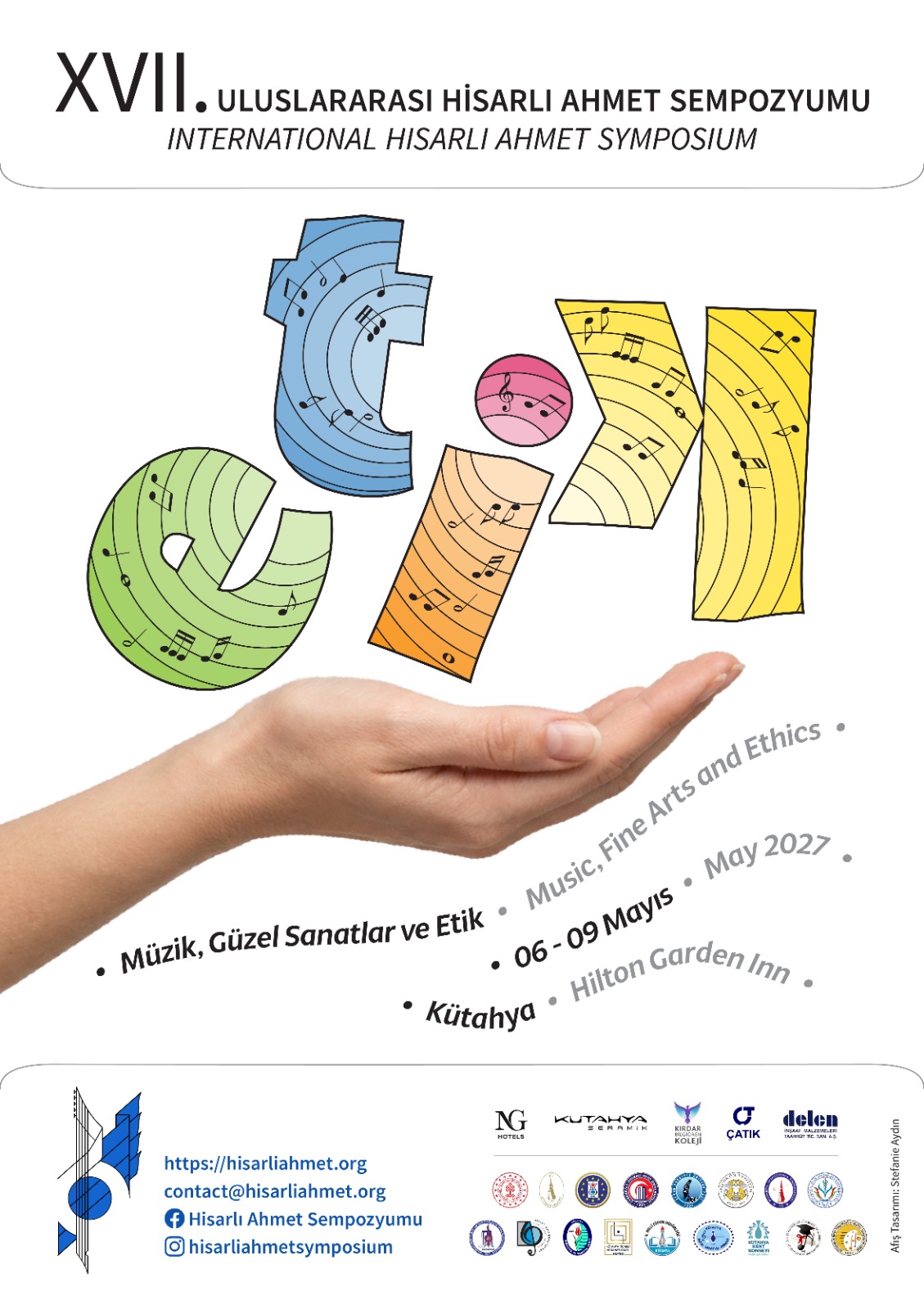
The theme of the 2027 symposium is “Fine Arts, Music and Ethics.”
This year’s symposium aims to examine, through an interdisciplinary approach, the multilayered relationship between the aesthetic dimension of art and ethical values. It seeks to provide an academic forum for discussing ethical issues arising in the creation, performance, education, preservation, and circulation of art, and for sharing theoretical and practice-based studies that contribute to the development of ethical principles and values in fine arts and music.
By evaluating the impact of art on individuals and society from an ethical perspective, the symposium aims to encourage the exchange of knowledge, experience, and views among artists, educators, researchers, and practitioners. It also seeks to examine, from a scholarly perspective, the relationship between art and contemporary issues such as the preservation of cultural heritage, social responsibility, human rights, sustainability, digital transformation, and artificial intelligence. In this regard, the symposium intends to foster new research at the intersection of art and ethics and to strengthen national and international academic collaboration.
The symposium welcomes theoretical, historical, practice-based, and interdisciplinary studies at the intersection of fine arts, music, and ethics. Original research addressing ethical approaches in all fields of art will be considered, including painting, sculpture, graphic design, ceramics, traditional arts, photography, radio, television, theatre, cinema, performing arts, choir, opera, instrument-making technology, music, music education, musicology, music technology, ethnomusicology, music theory, composition, instrumental and vocal performance, and art education.
Subtopics
- category Academic Incentives and Ethics
- category Academic Promotion and Appointment Criteria and Ethics
- category Accreditation and Ethics
- category Algorithms and Ethics
- category Scientific Publishing and Research Ethics
- category Ethics in Music Studies with Children
- category Academic Journals and Ethics
- category Digital Culture and Ethics
- category Digital Music Production and Ethics
- category Ethics in Associate Professorship Procedures
- category Ethics in Teaching and Learning
- category Educational Technologies and Ethics
- category Ethno-Andragogy and Music and Ethics
- category Diverse Learners and Ethics
- category Ethics in Photography
- category Ethics in Traditional Music Settings
- category Ethics in Traditional Turkish Arts
- category Ethics in Visual Communication Design
- category Ethics in Visual Arts
- category Graphic Design and Ethics
- category Performance Ethics
- category Public Art and Ethics
- category Professional Relationships and Ethics
- category Workplace Bullying
- category The Impact of Music on Moral Development
- category Music Educationnde Ethics
- category Music Criticism and Ethics
- category Ethics in the Music Industry
- category Ethics in Music Festivals and Organizations
- category Music Technologies and Ethics
- category Music Therapynde Ethics
- category Music and Virtue Ethics
- category Music Competitions and Ethics
- category Student–Educator Relationships and Ethics
- category Ethics in Assessment and Evaluation
- category Ethics in Performance Art
- category Ethics in Restoration and Conservation
- category Ethics in the Performing Arts
- category Art Associations and Ethics
- category Art Educationinde Ethics
- category Art Criticism and Ethics
- category The Art Market and Ethics
- category Ethics in Artistic Production
- category Freedom of Expression in Art and Ethics
- category Originality and Plagiarism in Art and Ethics
- category Ethics in Cinema and Media
- category Copyright and Ethics
- category Social Awareness and Ethics
- category Artificial Intelligence and Ethics
- category Lifelong Learning and Ethics
- category Talent Examinations and Ethics
- category Governance and Ethics
About The Symposium
Announcements
-
campaign
The proceeding of the 16th Symposium have been published. Click here to download.
-
campaign
17th Symposium's web page is now live at September 1, 2026: Fine Arts, Music, and Ethics...
Chairs of Scientific Board
Thank You For Your Contribution
- Republic of Turkey Minister of Culture and Tourism, Mehmet Nuri Ersoy
- Governor of Kütahya, Musa Işın
- Mayor of Kütahya, Eyüp Kahveci
- Rector of Çanakkale Onsekiz Mart University, Prof. Dr. R. Cüneyt Erenoğlu
- Rector of Afyon Kocatepe University, Prof.Dr. Mehmet Karakaş
- Rector of Dulumpınar University, Prof.Dr. Süleyman Kızıltoprak
- Rector of Kütahya Health Sciences University, Prof.Dr. Ahmet Tekin
- Director of Kütahya Provincial of National Education, Mustafa Yılmaz
- President of Kütahya Chamber of Commerce and Industry, Esin Güral Argat
- Director of Kütahya Provincial Culture and Tourism, Zekeriya Ünal
- Director of Kütahya Municipality's Culture and Social Affairs, Yıldırım Akgül
- Director of Kütahya Ahmet Yakupoğlu Fine Arts High School, Ahmet İren
- Kütahya Fine Arts Association
- Çanakkale Onsekiz Mart University State Conservatory
- Afyon Kocatepe University State Conservatory
- Association of Culture and Art of Kutahya for Mevlana Researches
- Afyon Kocatepe University State Conservatory Alumni Association
- Çatık Mining Company, İsmet Çatık (MAIN SPONSOR)
- Kütahya Seramik, Nafi Güral
- Delen Trade Company Inc., Nihat Delen
- Kırdar Bilgiören College, Rafet Kırdar
- Kaşi Ahmet Tile Ceramic Company, Ahmet Özmutaf
- Başkent Music Store
- İzge Publication